Automate Email Sending with Claude Code: Fully Automating Routine Tasks
We’ve been building up to this point with PDF report generation and more, but this time we’re tackling “email automation.” I built a system that can send emails on a schedule or based on specific conditions.
What We’re Building: An Email Automation Tool
Key Features
- Template system: Save templates for frequently used emails
- Mail merge: Read recipients and content from Excel for bulk sending
- File attachments: Automatically attach PDFs and Excel files
- Scheduled sending: Send emails automatically at specified times
- Send history: Track who received what and when
The Conversation with Claude Code
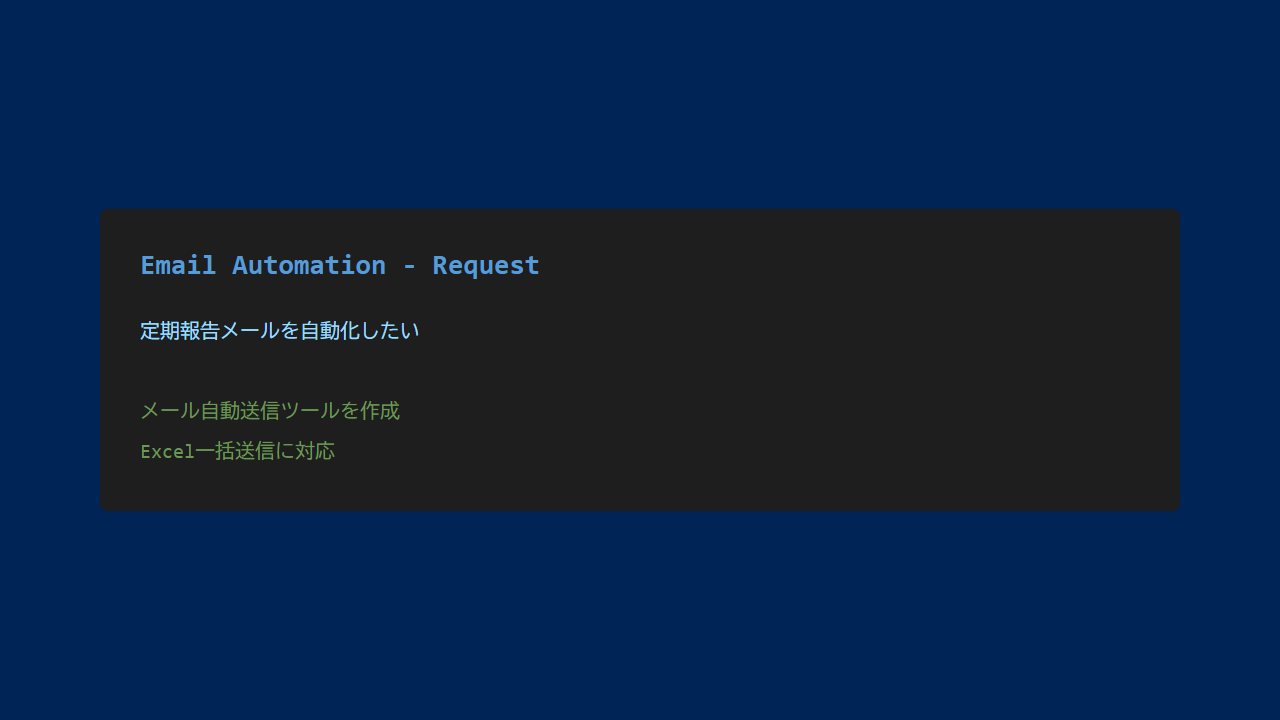
I asked Claude Code: “I want to automate my periodic report emails. Make it so I can do bulk sends from an Excel list.”
Claude Code suggested an implementation using the smtplib and email libraries:
- Gmail/Outlook SMTP configuration
- Template engine for generating email body text
- pandas for reading recipient data from Excel
- File attachment encoding
Implementation Steps
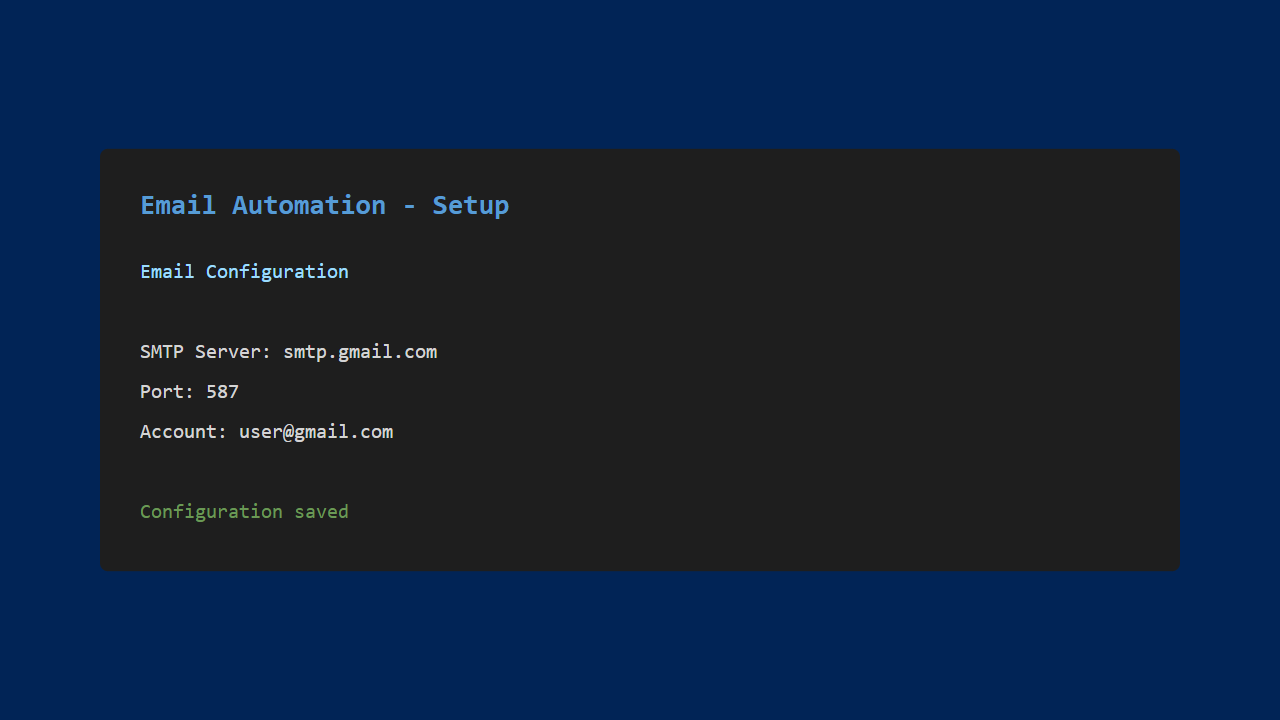
1. Email Configuration
Set up the sender’s email account and SMTP settings.
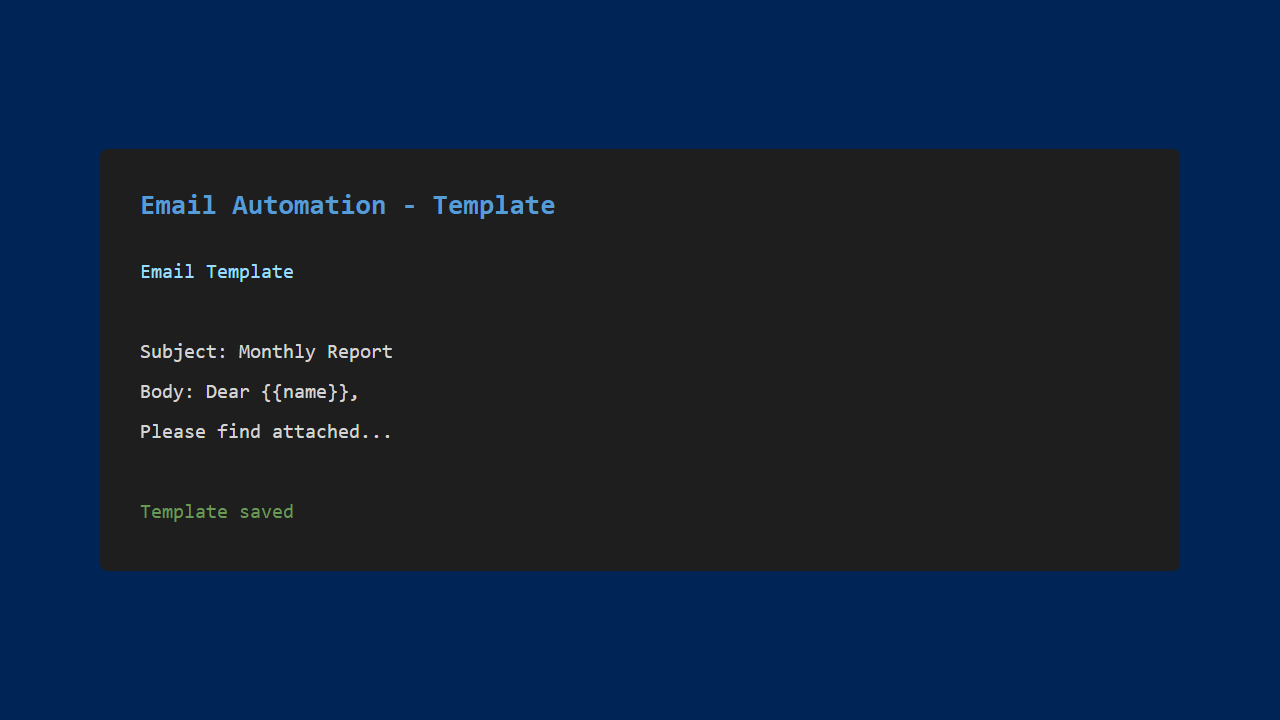
2. Create Templates
Create email templates. Use variables to insert recipient names and other personalized content.
3. Load the Recipient List
Import the recipient list from an Excel file.
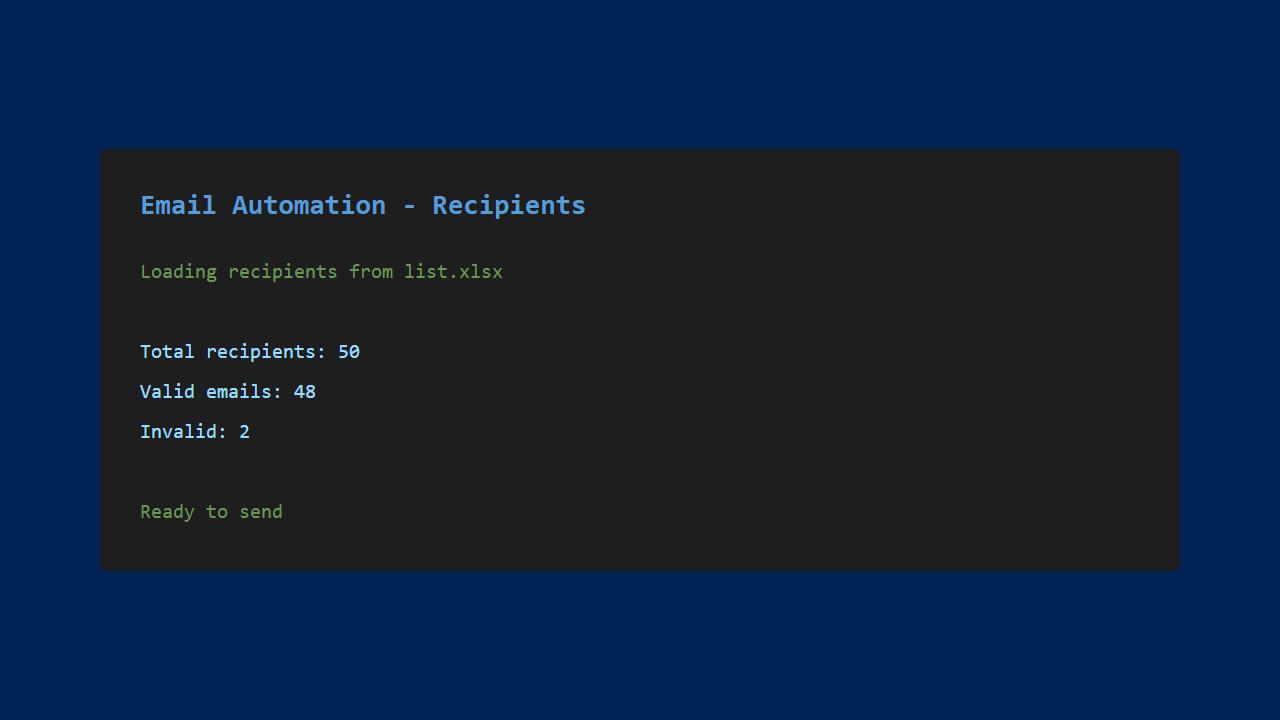
4. Execute Bulk Send
Review the content on the confirmation screen, then execute the bulk send.
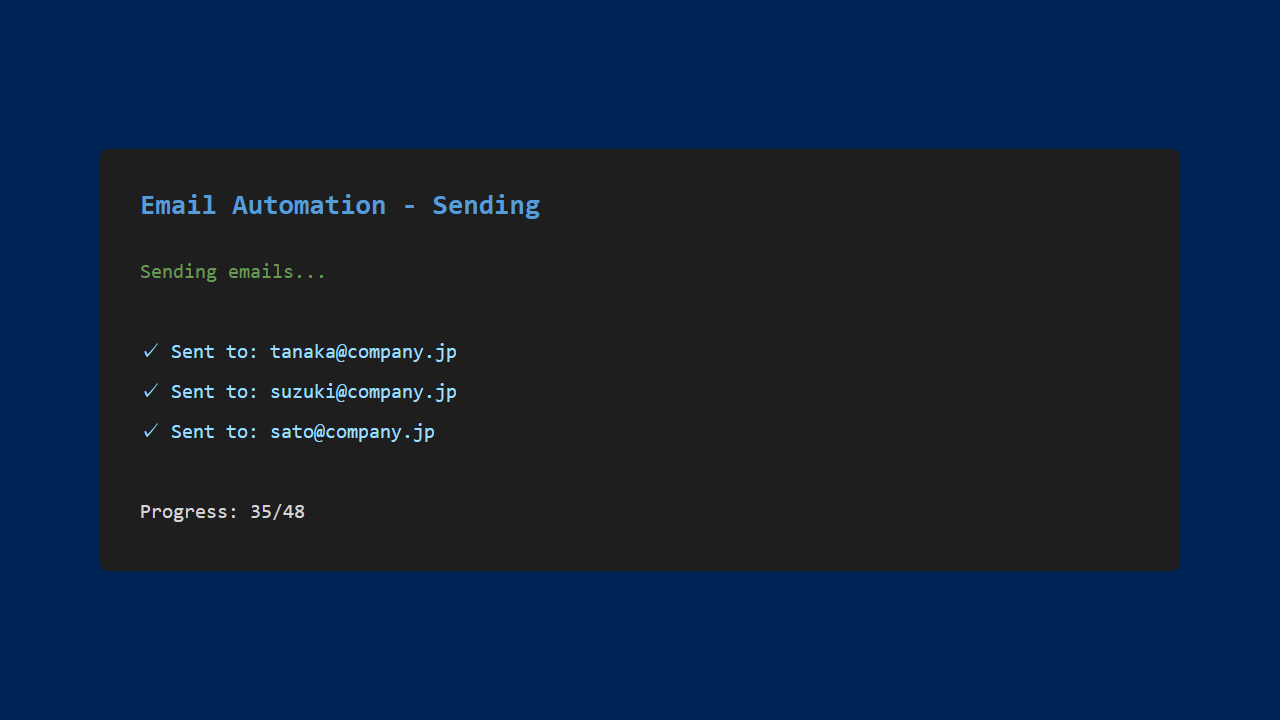
Streamlining Email Operations
Massive Time Savings
When sending personalized emails to 100 people:
- Manually: 2-3 hours
- Automated: A few minutes
Fewer Mistakes
- No name mix-ups: Names are inserted automatically from the data
- No forgotten attachments: Files are attached automatically
- No missed recipients: Every person on the list gets their email
Practical Use Cases
- Automatic monthly report delivery
- Sending invoices to clients
- Event announcements and mass mailings
- Automated reminder emails
My Impressions
What Worked Well
- Dramatic efficiency gains: Routine tasks are now almost fully automated
- Better reliability: Human errors are eliminated
- Flexible customization: Conditional logic and complex workflows are possible
- Send history logging: Easy to verify past sends when issues arise
Areas for Improvement
- More advanced HTML email design
- Read receipt tracking
- Automated reply handling
- Web-based interface for operation
Conclusion
Using Claude Code, I was able to build an email automation tool from scratch.
By automating routine email tasks, you free up time to focus on work that truly matters. The mail merge feature, in particular, is a practical function that applies to many business scenarios.
In the next installment, I’ll be building a comprehensive application that brings together everything we’ve learned so far.
See you in the next article!


Leave a Reply