My previous article on the W03 downgrade seems to have become a reference source for affiliate-heavy signup pages, which gave me a good laugh.
Writing articles is certainly anyone’s prerogative, but when you rely heavily on references to produce content, the lack of depth in knowledge becomes apparent.
Then again, when I’m desperately translating English papers for my own reports, my professors are probably thinking the same thing about me.
With that lengthy preamble aside, today’s topic is all about Xiaomi.
Some might think “Oh, the explosion incident?” — but this is completely unrelated. Regarding that incident, I personally give them credit for their swift response.
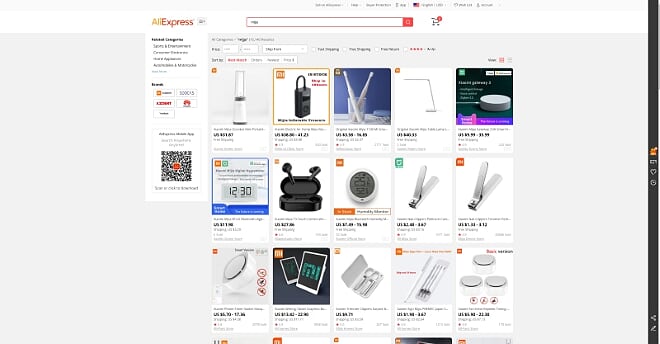
When browsing AliExpress, you occasionally come across products like this:
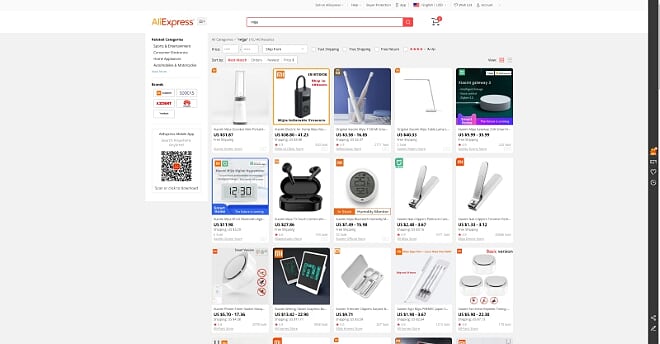
Seeing products like these, I used to think “Xiaomi is really branching out into everything, like Japan’s MUJI (Mujirushi Ryohin).” But one thing kept catching my eye.
The word “Mijia.” Almost every product sold under this line includes “Mijia” in the name.
Let’s look at another example. You probably recognize this mobile battery-looking mobile router:
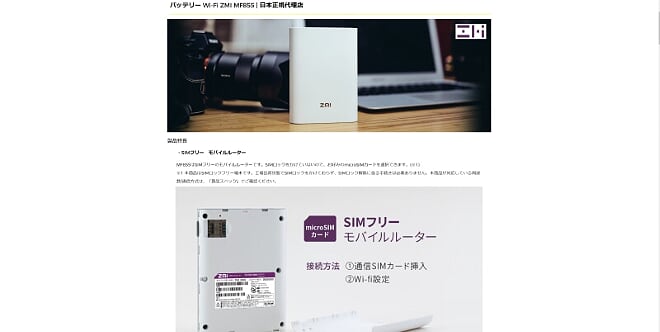
The model name is “ZMI MF855.” In Japan, it’s sold under the “ZMI” brand as a Xiaomi-affiliated brand.
So what exactly is a “Xiaomi-affiliated brand”?
What Are Xiaomi-Affiliated Brands?
As the name suggests, these are brands related to Xiaomi — brands that Xiaomi has invested in, or more specifically, what you might easily guess to be Xiaomi subsidiaries.
That’s essentially correct. Beyond its own brand, Xiaomi has a collective known as the “Xiaomi Ecological Chain,” and brands like ZMI and Mijia are members of this collective.
Broadly speaking, these are Xiaomi-backed products from Xiaomi-funded companies that actively adopt MUJI-inspired Xiaomi’s signature minimalist design philosophy.
About the Xiaomi Ecological Chain
Let’s dig a bit deeper into the Xiaomi Ecological Chain.
Earlier, I gave the very rough description of “Xiaomi-funded products under the Xiaomi umbrella,” so let me be more precise.
First, the companies that are members of the Xiaomi Ecological Chain (hereafter abbreviated as XEC) — such as ZMI, Mijia, and Qin — are all “independent operators” that have received investment from Xiaomi, making them subsidiaries.
The fundamental concept of the XEC aligns with Xiaomi’s “Smartphone + AIoT” strategy, where Xiaomi covers areas it can’t handle internally by establishing subsidiaries to distribute and fill the gaps.
Is Xiaomi Just Providing Funding?
The short answer is “no.”
Xiaomi isn’t simply investing in these subsidiaries. For the independent operators in the XEC, Xiaomi provides the corporate strategy mentioned above, as well as product design and quality control oversight. Though it’s not a case of Xiaomi vetting everything down to the last detail.
Additionally, Xiaomi holds the patents owned by these subsidiaries and retains authority over marketing.
To use an easy-to-understand Japanese analogy, think of former zaibatsu group companies or holding companies (HDs).
The latter — holding companies — is probably the most accurate comparison: a company whose business is to control the business activities of other companies by holding a majority of their stock.
Sales Channels Are Unified
Having read this far, you might think “Oh, so it’s just a holding company,” but each member company doesn’t independently sell through individual e-commerce platforms. Instead, “Xiaomi Youpin” manages the sales channels.
By selling through “Xiaomi Youpin,” the otherwise confusing array of XEC member companies is organized under one roof.
Let’s draw another Japanese comparison. The closest analogy is Ryohin Keikaku’s MUJI.
MUJI sells products under its own brand through ODM and OEM arrangements. The system is fundamentally the same: the “manufacturers supplying MUJI” are equivalent to the “XEC,” and the sales front — MUJI itself — corresponds to “Xiaomi Youpin.”
However, a key difference is that MUJI’s suppliers are merely providing ODM/OEM products.
Xiaomi Youpin consolidates and sells subsidiary products, while MUJI aggregates ODM/OEM goods. That’s the distinction.
Companies in the XEC
Mobile phones and smartphones — Redmi, Mi, 21KE, Black Shark, SUNMI, QIN, and Pocophone.
Smart home — Mijia, Yunmai, Viomi, iCHUNMi, Wuro, etc.
Home appliances — Roborock, MiniJ, SWDK, VH, SmartMi, MiiiW Technology, Aller, TINYMU, XPrint.
Security products — Lumi, Vima, Aqara.
Health and beauty — Doctor-B, Miaomiaoce, Oclean, iHealth, Yueli, HANDX, Leravan, SMATE, in the face, AirPOP, Senthmetic, Yuwell.
Smartwatches and fitness bands — Huami, Amazfit, Weloop.
Smart lighting — Yeelight and COOWOO.
Cameras — iMi, XiaoYi, MADV, 70MAI.
Audio — 1More, QCY, XGiMi, Inovel, Appotoronics, WHALEY, HAYLOU.
Electric bicycles, e-scooters, etc. — Ninebot, QiCYCLE, UMA, Yunmake.
Batteries and power — Zaofeng, ZMi, Kingmi.
Lifestyle — QIMIAN, Fiu, Popuband, Kiss Kiss Fish, HuoHou, Purely, 365WEAR, ZaxArt, One Cloud.
That’s a staggering number of brands under one umbrella.
Closing Thoughts
So it turns out that products that seem like Xiaomi but aren’t quite Xiaomi are indeed under Xiaomi’s involvement.
However, the brand names are not “Xiaomi.” Therefore, labeling a device like QIN 2 as “Xiaomi QIN 2” is a significant mistake.
Similarly, calling YI Technology (XiaoYi)’s mirrorless camera the “Xiaomi M1 Mirrorless Digital Camera” is also incorrect.
Gadget enthusiasts tend to be strangely particular about naming conventions, so take note. (A massive boomerang comes flying back at me as I write this.)
References
What is Xiaomi ecological chain or Xiaomi youpin? GearBest blog (access date: 2020.5.9)
What is Xiaomi Youpin or Ecological Chain System? Value Q (access date: 2020.5.9)
![[Installation Guide] Running Windows 10 on ARM on a Lumia 950 XL](https://miyagadget.page/wp-content/uploads/2023/08/SC5OSG1l.jpg)

Leave a Reply